21 Oct 2026
The Evolution of Compact Storage Practices Across Shifting Household Dynamics
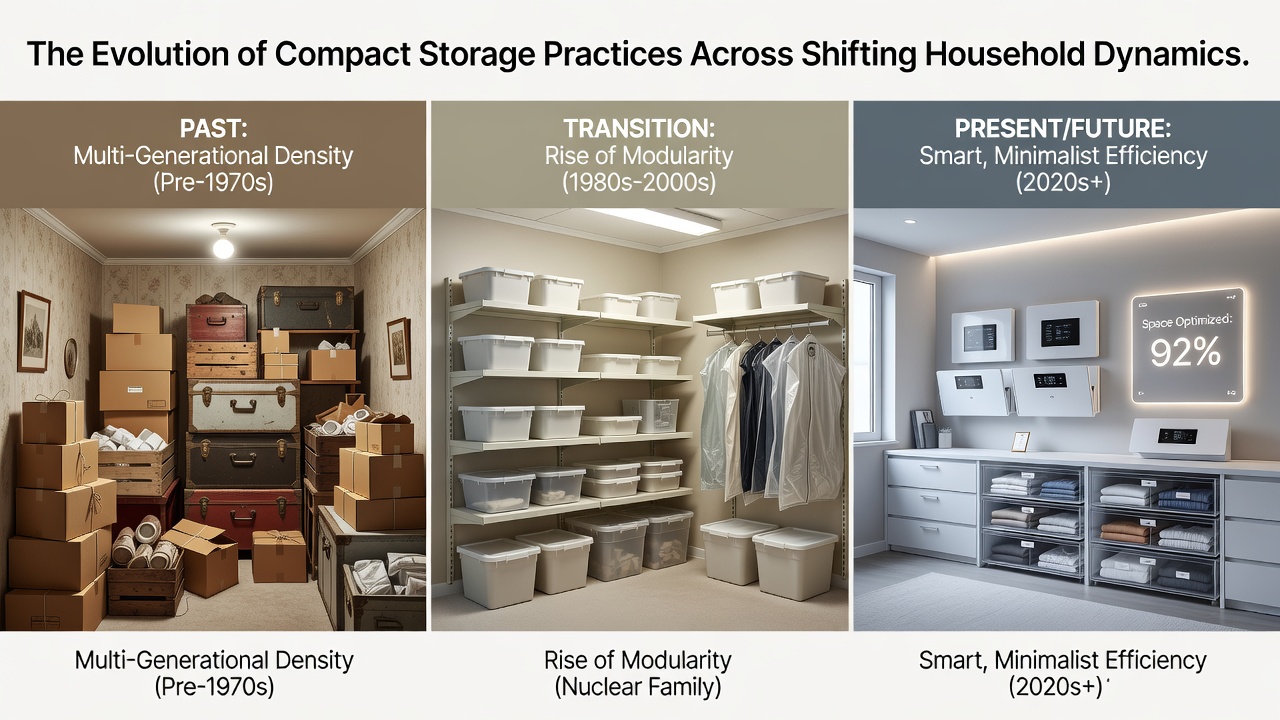
Household sizes have declined steadily across many regions since the late 20th century, and data from the US Census Bureau shows average American household size dropping from 3.14 persons in 1970 to 2.5 by 2023. This shift has prompted adaptations in storage methods as living spaces contract in urban centers where square footage per resident often falls below 400 square feet in new constructions. Observers note that economic pressures combined with demographic changes like delayed marriages and increased single-person households drive demand for solutions that fit into smaller footprints without sacrificing capacity.
Early Shifts in Storage Approaches
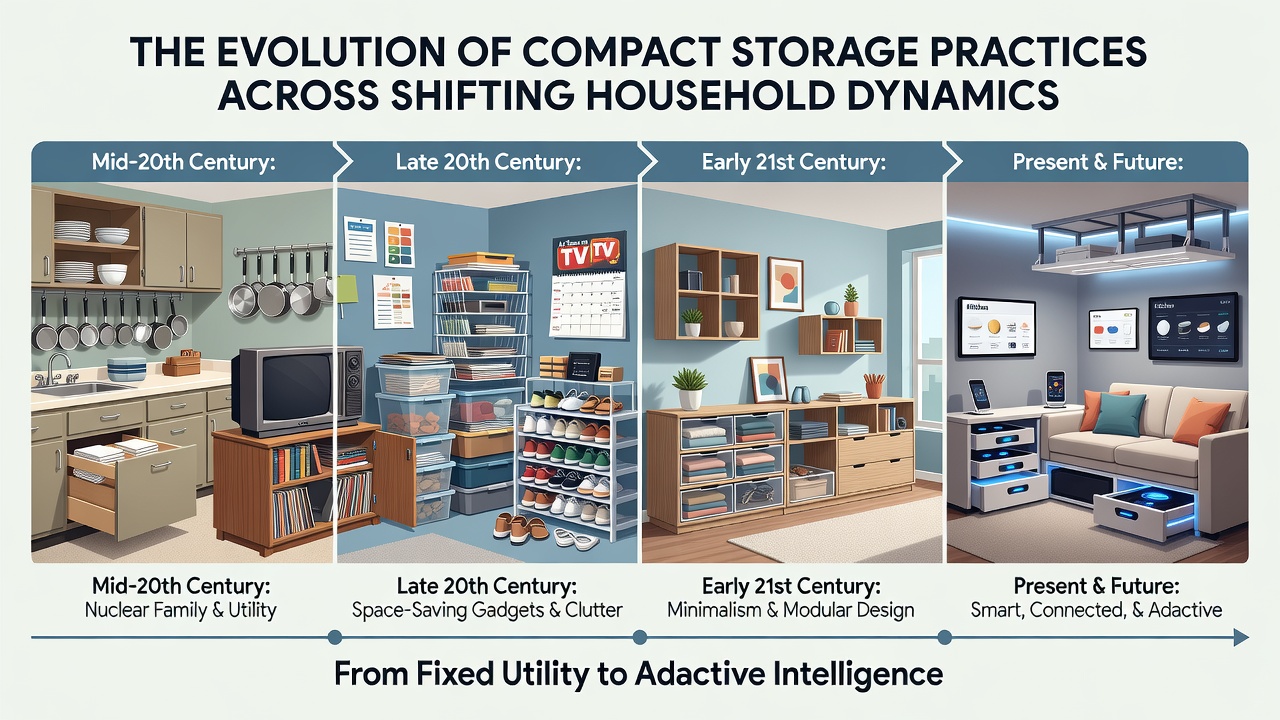
Post-war housing booms initially favored built-in closets and basic shelving units, yet by the 1980s rising property costs in cities such as New York and London encouraged residents to experiment with stackable bins and wall-mounted racks. Researchers at academic institutions documented how these early modular systems allowed vertical expansion, turning previously unused wall areas into functional zones for clothing, documents, and kitchenware. And while larger suburban homes once relied on sprawling attics or basements, the move toward apartment living in the 1990s accelerated interest in under-bed drawers and collapsible crates that could be stored away when not in use.
Demographic Pressures and Space Constraints
Urbanization trends have intensified since 2000, with Statistics Canada reporting that over 80 percent of new households in major metropolitan areas now occupy units under 600 square feet. Such conditions have led people to adopt vacuum-sealed bags for seasonal items and magnetic knife strips that free counter space in compact kitchens. Experts have observed parallel developments in European markets where EU housing statistics reveal similar compression of living areas amid population growth in dense cities. These patterns create ongoing needs for storage that integrates into furniture pieces like ottomans with hidden compartments or headboards featuring built-in shelves.
Technological Integration in Modern Practices
Smart home devices entered the storage landscape around 2015, and by October 2026 inventory-tracking sensors paired with mobile apps help residents monitor contents in tight spaces such as studio apartments or micro-homes. Data indicates that sales of automated closet systems rose 35 percent between 2020 and 2025 according to industry reports from trade associations in Australia and Japan. Those who study household behavior note that voice-activated lighting within storage units reduces the need for deep shelves that block visibility, while adjustable dividers allow reconfiguration as family compositions change through births, departures, or cohabitation arrangements. This flexibility proves particularly useful in multi-generational homes where space must serve both elderly residents requiring easy access and younger occupants managing remote work equipment.
Regional Variations and Cultural Influences
Storage customs differ markedly by geography, with Japanese households long favoring tatami-compatible low-profile cabinets that slide along walls, whereas North American approaches emphasize rolling carts and pegboards for tools and supplies. A study from a Canadian research university highlighted how immigration patterns introduce hybrid methods, such as combining Scandinavian flat-pack systems with traditional Asian lacquered chests that double as seating. In Australia, government housing data shows increased adoption of outdoor storage sheds integrated with indoor living zones to handle seasonal gear in smaller properties. These localized adaptations demonstrate how global supply chains now deliver components that residents mix according to specific cultural preferences and climate demands.
Future Directions Based on Current Trends
Projections through 2030 suggest continued emphasis on sustainable materials like recycled composites for bins and dividers, driven by regulatory standards in the EU that limit single-use plastics in household goods. Observers point to rising interest in 3D-printed custom organizers tailored to irregular alcoves found in older buildings undergoing renovation. And as remote work persists, dedicated zones for filing systems and device charging stations have become standard in updated floor plans across multiple continents. Figures from academic tracking programs reveal that households incorporating these elements report more efficient use of limited square footage compared to those relying on traditional freestanding furniture alone.
Conclusion
Compact storage practices continue to evolve alongside household structures shaped by economic, demographic, and technological forces. Evidence from census records and housing analyses confirms that methods once considered innovative now represent standard responses to spatial limitations in contemporary living environments. As patterns of cohabitation and work-from-home arrangements persist into late 2026, further refinements in modular and sensor-equipped systems are expected to emerge from ongoing research and market developments.